
We're done for the semester. In fact, I am leaving The Beacon and Boston to go intern in NYC for The Nation, so this will be my last post.
I leave you with this.
Famous physicist, Stephen Hawking, posed a question on Yahoo! answers this year.
"How can the human race survive the next hundred years?"
Surely the future of the planet, and of humanity, is the question of the day and makes any and all other issues seem trivial. Hold on tight.
Thanks for reading.
12/21/2006


12/19/2006
12/18/2006
12/08/2006
Romney and Gays
A Mitt Romney quote from 1994, in which he says the gay and lebian community "needs more support from the Republican Party," may haunt him in his efforts to win the presidency.
12/07/2006
Minimum Wage or a Living Wage
Jonathan Tasini says the $7.25 that Democrats are proposing is not enough
"Look at the facts. The federal poverty guidelines say that a family of three is considered to be below the poverty line when it earns $16,600 or less. The Democratic Party is proposing passing legislation that would raise the minimum wage to $7.25--and take two years to get there. That hike would bring a person working full-time to a grand total of about $15,000. "
"Look at the facts. The federal poverty guidelines say that a family of three is considered to be below the poverty line when it earns $16,600 or less. The Democratic Party is proposing passing legislation that would raise the minimum wage to $7.25--and take two years to get there. That hike would bring a person working full-time to a grand total of about $15,000. "
12/06/2006
Feingold on the Baker Commision
Sen. Russ Feingold's response to the Baker Commision.
“Unfortunately, the Iraq Study Group report does too little to change the flawed mind-set that led to the misguided war in Iraq. Maybe there are still people in Washington who need a study group to tell them that the policy in Iraq isn’t working, but the American people are way ahead of this report.
While the report has regenerated a few good ideas, it doesn’t adequately put Iraq in the context of a broader national security strategy. We need an Iraq policy that is guided by our top national security priority – defeating the terrorist network that attacked us on 9/11 and its allies. We can’t continue to just look at Iraq in isolation. Unless we set a serious timetable for redeploying our troops from Iraq, we will be unable to effectively address these global threats. In the end, this report is a regrettable example of ‘official Washington’ missing the point.”
12/05/2006
Kristol on the Iraq Study Group
This piece in The Weekly Standard by William Kristol and Robert Kagan takes aim at the Baker Commision's report. It is a very interesting read.
12/03/2006
McGovern's Exit Strategy
Not long ago there was a debate on this blog about George McGovern's proposed Iraq exit strategy.
It appears the debate may have reached Washington, as Katrina vanden Heuvel reports in The Nation.
It appears the debate may have reached Washington, as Katrina vanden Heuvel reports in The Nation.
"There are detailed withdrawal plans available for consideration. Each one provides a framework for finding a way out of this disaster that has disintegrated into a humanitarian catastrophe. The Congressional Progressive Caucus – the largest caucus in Congress – met last week with George McGovern, co-author of the 142-page Out of Iraq: A Practical Plan for Withdrawal Now. Written with former history professor and State Department Middle East expert, William R. Polk, the book calls for a withdrawal to be completed over approximately seven months with a subsequent massive reconstruction effort led by Iraqis and largely funded by the United States (at a far cheaper cost than maintaining the occupation). "
11/26/2006
Assessing the 2008 Hopefuls: Part I
In this continuing segment, I will assess the strengths and weaknesses of some of those likely to be 2008 presidential candidates. I'll also let you know what I personally think of each candidate from my perspective as a left-leaning moderate voter.

The rundown: Since losing the 2000 race for the Republican nomination, in what many view as a bitter and dirty campaign, Arizona Senator John McCain has risen in the ranks to become one of the most powerful members of Congress. He is known in Washington and the media for being a strong conservative who is nonetheless willing to compromise with the other party. Along with Russ Feingold, he introduced campaign finance reform legislation, angering some conservatives. He was also part of the "Gang of 14," a group of 7 Democratic and 7 Republican senators who struck a deal on the filibustering of Bush appointees. Hawkish on Iraq and the war on terror, he has been critical of the administration's handling of the invasion but believes more troops are currently needed to stabilize Baghdad. On social issues such as abortion, McCain is solidly conservative.
Chances with Republican voters: 8/10. Two years ago, McCain's chances to win over the religious base of the Republican electorate appeared slim. In 2000, McCain delivered a blistering speech in which he famously called Pat Robertson and Jerry Falwell "agents of intolerance" who distorted his record because he didn't "pander to them." Though this won him respect among moderates who wouldn't otherwise support him but were uncomfortable with Falwell and Robertson's brand of faith, the Senator has since reconciled with Falwell. He has also been emphasizing his pro-life, pro-family credentials. While there are undoubtedly Republicans who find McCain too much of a rogue and too critical of the GOP to support him, he appears at this point to be the frontrunner for the nomination.
Chances with the general electorate: 7/10. McCain consistantly does well in hypothetical horse race polls, especially when all voters are surveyed. In the post 9/11 world, he is viewed as serious about terrorism and strong on defense. And while many of his colleagues have been hurt by their support for the increasingly unpopular Iraq war, McCain has managed to maintain an image of both skepticism and strength. Voters appreciate his criticism of the handling of the war and it appears they are weighing this more heavily than his continued calls for more troops. It's possible, though, that the Senator's hawkishness may come back to haunt him, especially if the Baker commission's much anticipated report finds that a withdrawal is the best policy. The 2006 midterms hurt McCain's chances as a down-the-line conservative, as that election seemed to be a victory for moderation and restraint. Nonetheless, after 8 years of the Bush administration, many voters will support the man who is seen as honest and competent, traits McCain has worked hard to portray.
Would I support him?: Very Unlikely. In my mind, the most attractive thing about John McCain was his willingness to say exactly what was on his mind (remember the "straight-talk express?") despite the political unpopularity of it. As a Republican, lambasting the powerful religious right was a move of great bravery. He was right and I believe he still knows that he was. In his quest to win support for the 2008 primaries, he has run to the right, embracing all that he was once skeptical of. Furthermore, I believe the media depiction of McCain as an independent-minded conservative is lazy and misleading journalism. Saying that more troops should have been sent into Iraq from the beginning is by no means outside the establishment; it's popular opinion. If nothing else, McCain would probably run a much more competent administration than his predecessor. But he can no longer guarantee that it would be an honest one.
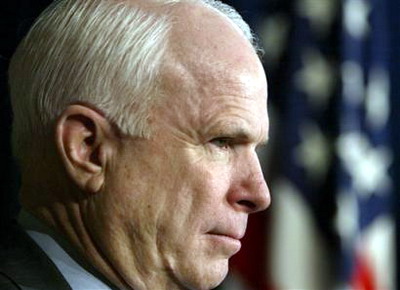
John McCain
The rundown: Since losing the 2000 race for the Republican nomination, in what many view as a bitter and dirty campaign, Arizona Senator John McCain has risen in the ranks to become one of the most powerful members of Congress. He is known in Washington and the media for being a strong conservative who is nonetheless willing to compromise with the other party. Along with Russ Feingold, he introduced campaign finance reform legislation, angering some conservatives. He was also part of the "Gang of 14," a group of 7 Democratic and 7 Republican senators who struck a deal on the filibustering of Bush appointees. Hawkish on Iraq and the war on terror, he has been critical of the administration's handling of the invasion but believes more troops are currently needed to stabilize Baghdad. On social issues such as abortion, McCain is solidly conservative.
Chances with Republican voters: 8/10. Two years ago, McCain's chances to win over the religious base of the Republican electorate appeared slim. In 2000, McCain delivered a blistering speech in which he famously called Pat Robertson and Jerry Falwell "agents of intolerance" who distorted his record because he didn't "pander to them." Though this won him respect among moderates who wouldn't otherwise support him but were uncomfortable with Falwell and Robertson's brand of faith, the Senator has since reconciled with Falwell. He has also been emphasizing his pro-life, pro-family credentials. While there are undoubtedly Republicans who find McCain too much of a rogue and too critical of the GOP to support him, he appears at this point to be the frontrunner for the nomination.
Chances with the general electorate: 7/10. McCain consistantly does well in hypothetical horse race polls, especially when all voters are surveyed. In the post 9/11 world, he is viewed as serious about terrorism and strong on defense. And while many of his colleagues have been hurt by their support for the increasingly unpopular Iraq war, McCain has managed to maintain an image of both skepticism and strength. Voters appreciate his criticism of the handling of the war and it appears they are weighing this more heavily than his continued calls for more troops. It's possible, though, that the Senator's hawkishness may come back to haunt him, especially if the Baker commission's much anticipated report finds that a withdrawal is the best policy. The 2006 midterms hurt McCain's chances as a down-the-line conservative, as that election seemed to be a victory for moderation and restraint. Nonetheless, after 8 years of the Bush administration, many voters will support the man who is seen as honest and competent, traits McCain has worked hard to portray.
Would I support him?: Very Unlikely. In my mind, the most attractive thing about John McCain was his willingness to say exactly what was on his mind (remember the "straight-talk express?") despite the political unpopularity of it. As a Republican, lambasting the powerful religious right was a move of great bravery. He was right and I believe he still knows that he was. In his quest to win support for the 2008 primaries, he has run to the right, embracing all that he was once skeptical of. Furthermore, I believe the media depiction of McCain as an independent-minded conservative is lazy and misleading journalism. Saying that more troops should have been sent into Iraq from the beginning is by no means outside the establishment; it's popular opinion. If nothing else, McCain would probably run a much more competent administration than his predecessor. But he can no longer guarantee that it would be an honest one.
Subscribe to:
Posts (Atom)
